AI Doesn’t Need to Be Perfect to Be Valuable
You tried AI for the first time. You typed a prompt, hit enter, and waited for magic. What you got was something close but not quite right. The tone was off. A fact was wrong. The structure felt generic. So you shrugged, closed the tab, and decided AI “isn’t ready yet.”
This is the perfection trap. And it is costing your business more than you realize.
The truth is AI does not need to be flawless to deliver enormous value. The secret is not better AI. It is better collaboration. When you pair imperfect AI output with thoughtful human in the loop AI review, you get results that rival or exceed fully human work at a fraction of the time and cost. Research from Harvard Business Review, studying over 1,500 companies, found that the biggest performance improvements come when humans and AI work together, enhancing each other’s strengths rather than operating in isolation.
In this post, we will explore why AI will never be perfect, why that is actually good news, and how you can build a practical human review workflow that saves time without sacrificing quality.
Introduction: The Perfection Trap
Most business owners fall into one of two camps. They either trust AI output blindly and get burned by mistakes, or they dismiss AI entirely because “it’s not good enough.” Both camps miss the real opportunity: AI at 70-80% quality is still massively valuable when paired with human review.
Think of it this way. You would not refuse a hammer because it cannot build a house alone. AI is a tool, not a magic wand. The goal is effective collaboration between human judgment and machine speed.
Why “Perfect or Nothing” Thinking Holds Businesses Back
The all-or-nothing fallacy is one of the most common reasons businesses delay AI adoption. Owners tell themselves they will adopt AI “when it gets better” or “when the models improve.” Meanwhile, their competitors are already using imperfect AI to draft content, generate ideas, and automate routine work. We debunked similar misconceptions in our guide on common AI myths that hold businesses back.
human in the loop AI review is not a workaround for flawed technology. It is the entire point. Humans bring context, judgment, and brand awareness that AI fundamentally cannot replicate. The “imperfection” of AI is not a bug to be fixed. It is a signal that the tool is being used correctly, as a first draft engine rather than a final output generator.
The Hidden Cost of Waiting for Perfect AI
Every week you wait for AI to become flawless, your business forfeits time that could be spent creating, marketing, and growing. Consider the analogy of early website adoption. In the early 2000s, businesses that invested in basic websites pulled ahead of competitors who waited for “the perfect platform.” The same pattern is playing out now with AI.
Small businesses that adopt early, even with imperfect AI, gain compounding advantages: faster content production, better customer response times, and more time for strategic work. Those who wait will find themselves playing catch-up in a market that is moving quickly.
The cost is not in adopting AI too soon. The cost is in waiting too long.
Why AI Output Is Never (and Will Never Be) Perfect
To understand why AI needs human review, you need to understand how AI actually works. And the short answer is this: AI is probabilistic, not deterministic. It does not “know” facts. It predicts the most likely sequence of words or pixels based on patterns in its training data. This fundamental architecture means AI will always generate outputs that require human judgment.
The Stanford HAI AI Index Report consistently documents accuracy benchmarks showing that even the most advanced models, including GPT-4, Claude, and Gemini, produce errors across a wide range of tasks. This is not a limitation of any specific model. It is an inherent characteristic of the technology itself.
The Statistical Nature of AI: It’s Probabilistic, Not Deterministic
When you ask an AI a question, it calculates the most probable answer based on billions of text examples. It does not “think.” It predicts. Think of AI as a brilliant intern: incredibly fast and creative, but it needs supervision to check facts and ensure the output aligns with your brand.
Understanding this distinction is the foundation of effective AI output quality review. When you stop expecting perfection and start expecting drafts, everything changes.
Common Types of AI Errors (and Why They Matter Less Than You Think)
AI makes predictable types of errors. Knowing what they are makes review faster and more effective:
- Hallucinations: AI invents facts, citations, or quotes that sound plausible but are entirely fabricated.
- Factual inaccuracies: Numbers, dates, or details are wrong, even if they seem correct.
- Tone mismatches: The writing voice does not align with your brand personality.
- Logical inconsistencies: The argument contradicts itself across different sections.
- Generic phrasing: The content lacks specific examples or unique insight.
Most AI errors fall into low-risk categories like wording and formatting. The errors that matter most, such as brand voice mismatches or factual accuracy, are exactly the ones humans catch fastest.
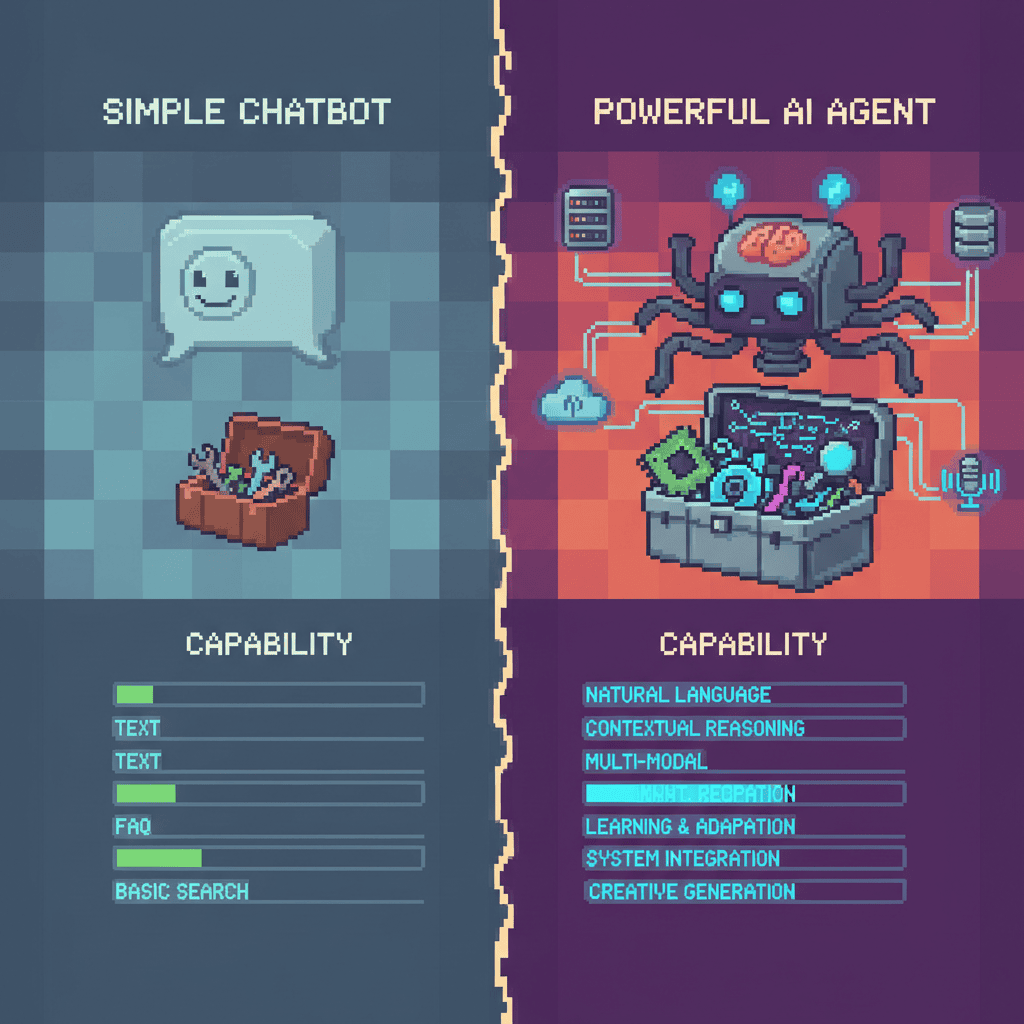
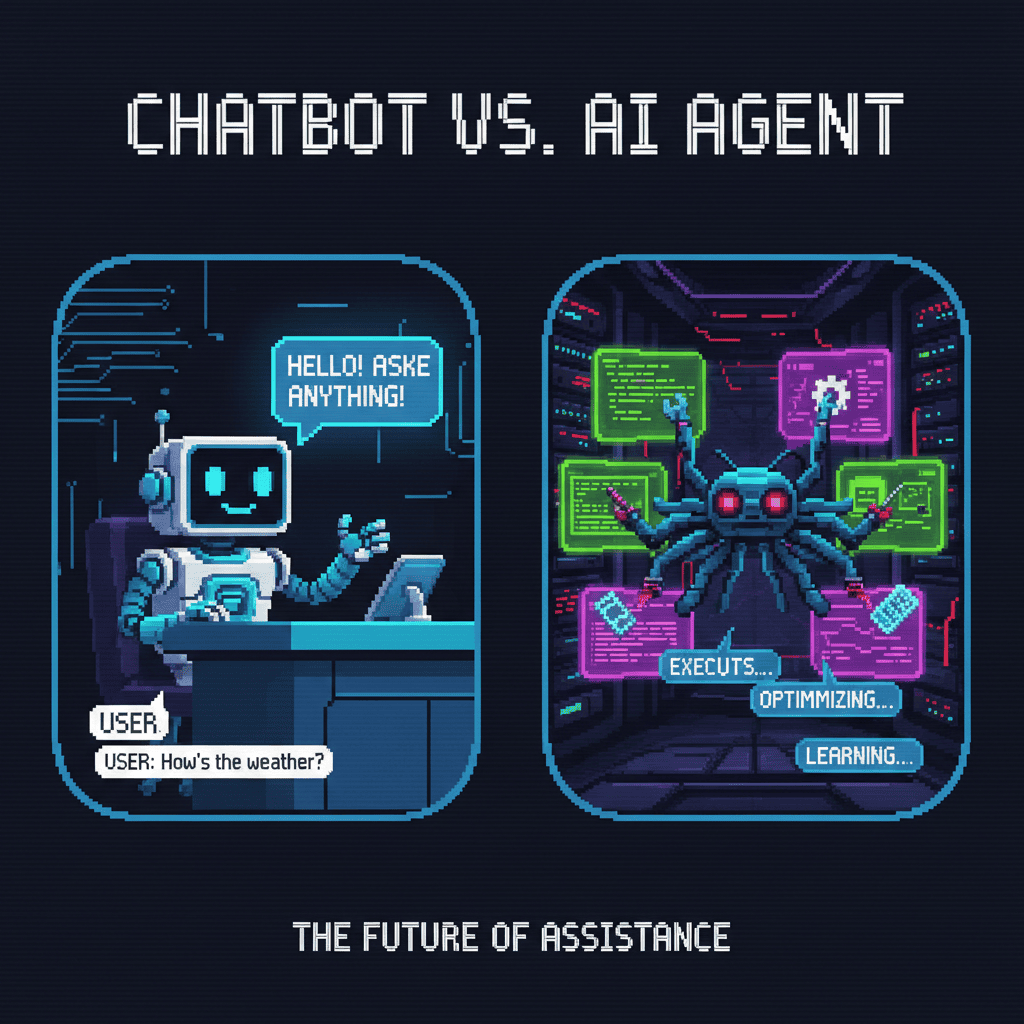
For a deeper look at how different AI tools handle these limitations, check out our guide on AI agents vs. AI chatbots and their key differences.

The 70% Rule: Why Imperfect AI Is Still Worth Using
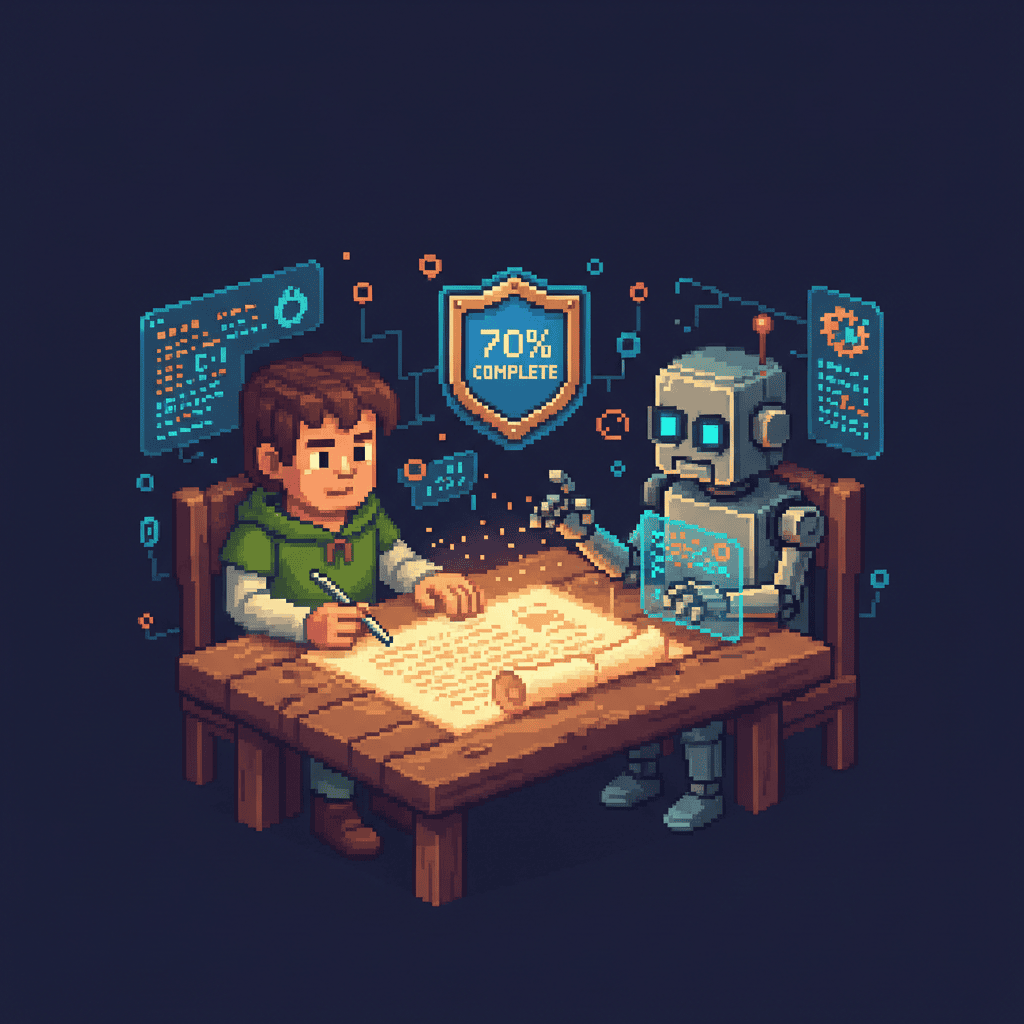
We call it the 70% Rule. AI can produce 70-80% quality output in seconds. Human review brings that output to 95%+ quality in minutes. The result is professional-grade work in a fraction of the time needed to create from scratch.
Let’s look at the math. Writing a blog post from scratch might take two hours. AI generates a first draft in 30 seconds. Human review and editing takes 15 minutes. The net result is an 85% time saving while maintaining comparable quality. That is a strategic advantage.
Research from MIT Sloan Management Review confirms this pattern, showing productivity improvements of 20-40% when humans review and refine AI output compared to working entirely from scratch. PwC’s AI Business Survey further reinforces the point: companies using human-in-the-loop approaches report significantly higher ROI from their AI investments than those pursuing full automation.
Speed vs. Perfection: The Real Trade-Off
The real trade-off is not quality versus speed. It is speed plus review versus slow perfection. When you compare “AI draft plus 15-minute review” against “writing from scratch for two hours,” the choice becomes obvious.
“Good enough” is the smart business strategy for most content. Internal memos, social media drafts, and first-pass outlines all benefit from AI speed. The review process catches what matters.
Real-World Examples of Imperfect AI Delivering Value
Consider these business scenarios:
- A small retail business uses AI to draft social media posts. The owner reviews each post, adds specific product mentions, and posts three times more frequently. Sales from social channels increase by 25%.
- A startup founder uses AI for first-draft blog posts on industry topics. She spends 15 minutes per post on review and edits, publishing weekly instead of monthly. Her site traffic grows steadily as search engines index fresh content.
- A marketing team uses AI exclusively for ideation and outlines. The human team writes the final content from AI-generated structures. They produce twice as many campaigns in half the time.
These examples share a common thread. None of them use AI output without review. All of them use how to review AI generated content as a core skill.
Want to learn more about how AI saves time? Read our guide on how AI can save your employees hours every week.
How Human Review Transforms AI Output from Good to Great
Human review is not about fixing broken AI. It is about elevating good AI output to excellent results. The value chain is simple: AI generates raw material at scale, and humans add the final quality layer that makes the output valuable and trustworthy.
Harvard Business Review’s seminal work on collaborative intelligence frames this perfectly. Humans need to train AI systems, explain their outputs, and ensure they are used responsibly. Gartner research on AI augmentation versus automation reinforces this: human-plus-machine combinations consistently create more value than full automation alone.
What Humans Bring That AI Can’t: Context, Judgment, and Brand Voice
AI is powerful, but there are things it simply cannot do:
- Context: AI does not know your specific customer, your market, or your business history. It generates content that could apply to anyone.
- Judgment: AI cannot weigh competing priorities, assess ethical considerations, or make strategic decisions about what to include or exclude.
- Brand voice: AI imitates style patterns but does not understand your brand’s unique personality, values, or tone. It approximates rather than embodies.
- Emotional intelligence: AI misses nuance, humor, empathy, and cultural context. These are the elements that make content connect with real people.
For more on keeping the human element in digital interactions, see our post on balancing AI with the human touch in customer service.
The Human-in-the-Loop Workflow: A Step-by-Step Process
Here is a practical, repeatable workflow for reviewing AI-generated content:
- Generate: Use AI to produce a first draft or initial output. Write clear prompts with specific instructions about tone, audience, and format. The better your prompt, the better your starting point.
- Review: Read through the entire output for factual accuracy, brand voice alignment, tone appropriateness, and logical flow. Do not edit yet. Just read and note issues.
- Edit: Correct errors, add specific examples, insert brand-specific language, and refine the structure. This is where you add the value AI cannot provide.
- Verify: Fact-check every claim. Verify statistics, quotes, and source references. This step catches hallucinations and fabricated details.
- Polish: Do a final read-through for readability, formatting, and flow. Ensure the content reads naturally and meets your quality standards.
- Publish: Deploy with confidence, knowing a human eye has validated every aspect of the content.
Building Your AI Review Checklist
Use this checklist for every piece of AI-generated content you publish:
- [ ] Factual accuracy verified against reliable sources
- [ ] Brand voice matches your tone guidelines
- [ ] No hallucinations or invented citations present
- [ ] Logical flow makes sense from start to finish
- [ ] Specific examples or case details added where needed
- [ ] Calls to action are clear, relevant, and aligned with goals
- [ ] Final human read-through completed
Print this checklist. Keep it at your desk. Use it every time. Within a few weeks, the review process will become second nature and your review time will drop even further.
For more workflow frameworks, check out our guide on AI workflows every marketing team needs.
Common Objections to Human-in-the-Loop AI
Even after seeing the evidence, you might still have doubts. Let’s address the most common objections.
“But Isn’t the Point of AI to Save Time?”
Yes, it does save time. But AI saves more time when reviewed. Thirty seconds to generate plus 10 minutes to review equals 85% time saved compared to writing from scratch.
Review time is where the value is created. The AI generates the raw material. Your review transforms it into finished content. Both steps are essential.
“Won’t Human Review Slow Us Down?”
Review is dramatically faster than creation. Humans are exceptionally good at spotting errors, inconsistencies, and tone mismatches quickly. A 10-minute review of AI output replaces a 2-hour writing session. That is a 92% reduction in time investment.
The review process gets faster with practice. Within a few weeks, a mental checklist cuts review time in half. The first review might take 15 minutes. The fiftieth takes 5.
“How Do I Know When to Trust AI vs. When to Override?”
Use this simple risk-based framework to decide:
- Low risk (social posts, draft ideas, internal memos): Trust AI with light review. Scan for major errors and publish.
- Medium risk (blog posts, email newsletters, website copy): Apply the full six-step review process. Verify facts, check tone, and refine thoroughly.
- High risk (legal content, financial advice, medical information, customer contracts): Treat AI as a starting point only. Heavier human oversight is essential. Use AI for structure and draft, but every fact and recommendation must be human-verified.
The more you work with AI, the better you get at knowing when to trust and when to edit. This judgment develops over time, making you more valuable in an AI-enhanced workplace.
For a deeper perspective on how AI changes the workplace, read our post on how AI augments work rather than replacing employees.
Frequently Asked Questions
Does AI need to be perfect to be useful?
No. AI delivers significant value even at 70-80% quality when paired with human review. The key is using AI for speed and volume, then applying human judgment for accuracy, brand voice alignment, and context. The cost of reviewing AI output is far lower than creating from scratch.
What is human-in-the-loop AI?
Human-in-the-loop AI is a workflow where AI generates initial output but a human reviews, edits, and approves the final result before it is published. This approach combines AI speed and scale with human judgment, context, and quality control.
How much time does human review of AI content actually save?
A task that takes 2 hours from scratch might take 30 seconds of AI generation plus 10-15 minutes of human review, saving roughly 85% of the time while maintaining quality. Exact savings depend on task complexity and your familiarity with the process.
What are the most common mistakes AI makes?
AI typically makes errors in factual accuracy, tone consistency, logical flow, brand voice alignment, and specific context. Most of these errors are caught quickly by a human reviewer and are less impactful than the time savings AI provides.
Should I trust AI-generated content without review?
No. AI-generated content should always be reviewed by a human before publication, especially for customer-facing content. The review process is fast, typically 10-15 minutes, and ensures accuracy, brand consistency, and quality.
Conclusion: Collaboration Over Perfection
The most important takeaway from this post is simple. AI’s value does not come from perfection. It comes from collaboration. The three core concepts to remember are the 70% Rule (imperfect AI is still worth using), the six-step review workflow (generate, review, edit, verify, polish, publish), and the risk-based trust framework (low, medium, high).
You do not need to be an AI expert. You do not need to wait for better models. Start now, with the tools you already have, by applying human judgment to AI output. That combination is a real competitive advantage.
As Harvard Business Review concluded in their landmark study, the biggest performance improvements come when humans and smart machines work together. Not when one replaces the other. Not when either operates alone. Together.
The Future of Work Is Human + AI, Not Human vs. AI
Imagine a workplace where AI handles volume and speed while humans focus on quality and judgment. AI drafts the first version. Humans refine it. This is available today for any business willing to adopt the right workflow.
Small businesses that embrace this human-plus-AI mindset will produce more content, respond faster to customers, and free up teams for higher-value strategic work. They will not be replaced by AI. They will be empowered by it.
Your Next Step
Ready to build an AI workflow that works for your business? Let’s talk. Pixel Studio Creations helps small businesses adopt practical AI strategies that deliver real results.
Explore our practical AI adoption guides. Start with AI workflows for marketing teams or learn to get your content cited by AI search engines. The only missing piece is your first step.