AI Agents vs. AI Chatbots: What’s the Difference?
You have probably heard the terms “AI agent” and “AI chatbot” used interchangeably in recent conversations, blog posts, and marketing emails. But they are not the same thing. Understanding the difference between AI agents and chatbots matters because choosing the wrong tool for your business can waste time, money, and opportunity.
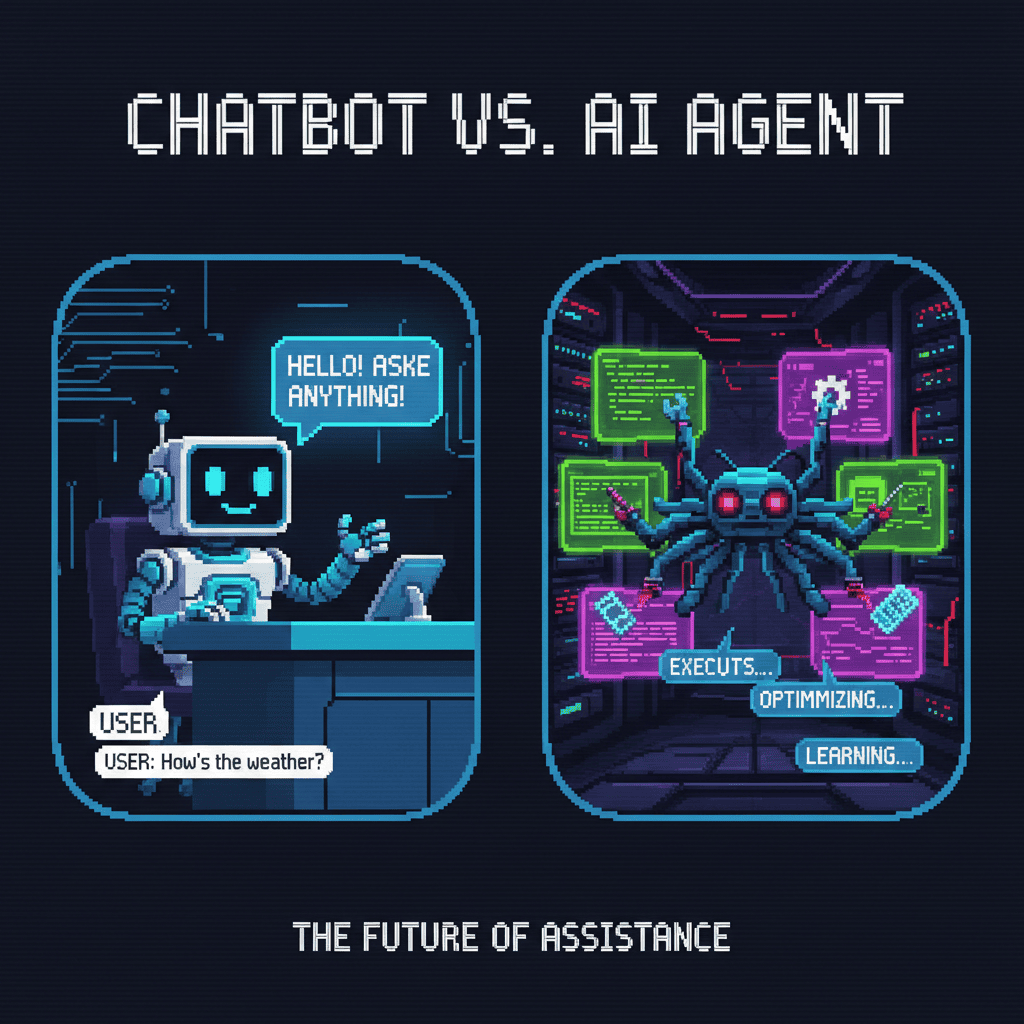
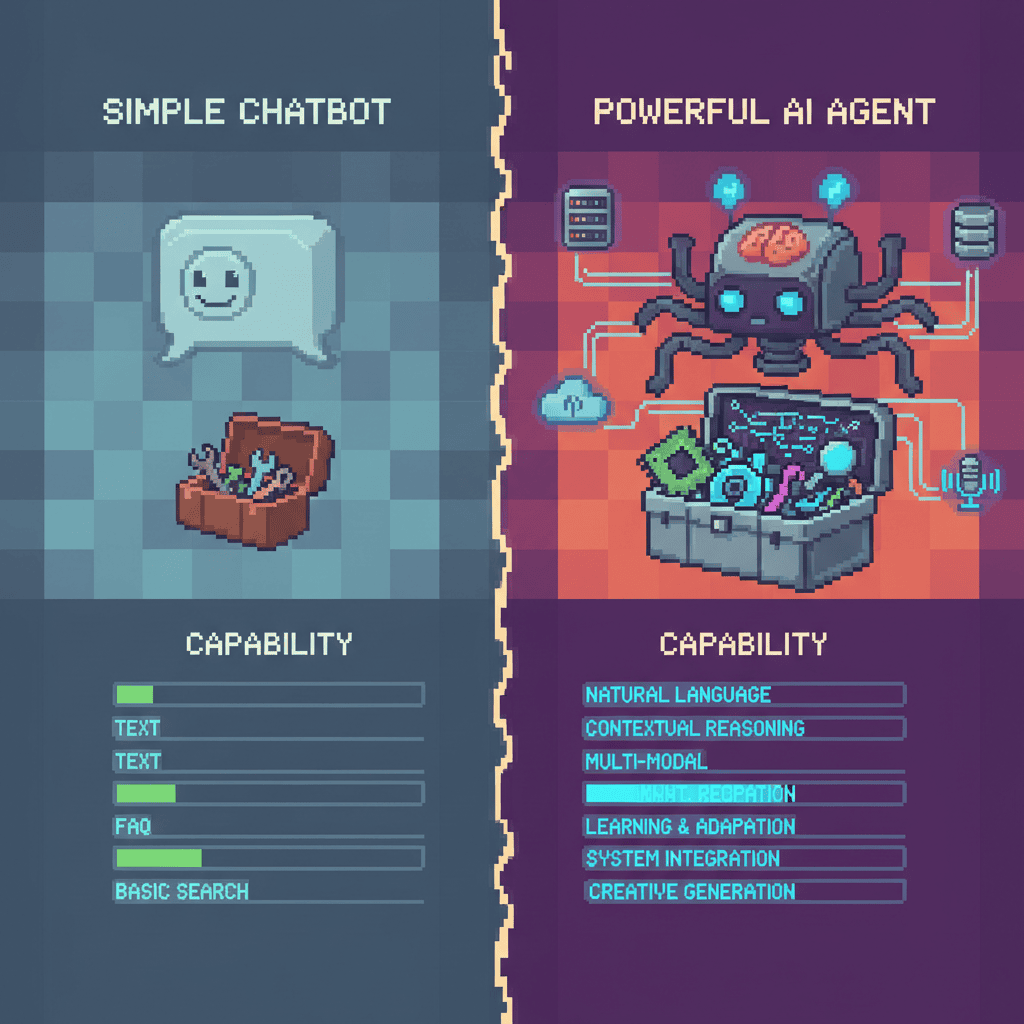
An AI chatbot is a software program that responds to user prompts using pre-programmed rules or natural language processing. An AI agent is an autonomous system that perceives its environment, makes decisions, and takes actions to achieve goals without constant human guidance. The key difference between AI agents and chatbots is autonomy: chatbots react to input, while agents proactively pursue objectives. In this guide, we will break down exactly how these two types of AI work, when to use each one for your business, and how to choose the right AI agent or chatbot for your needs.
What Is an AI Chatbot?
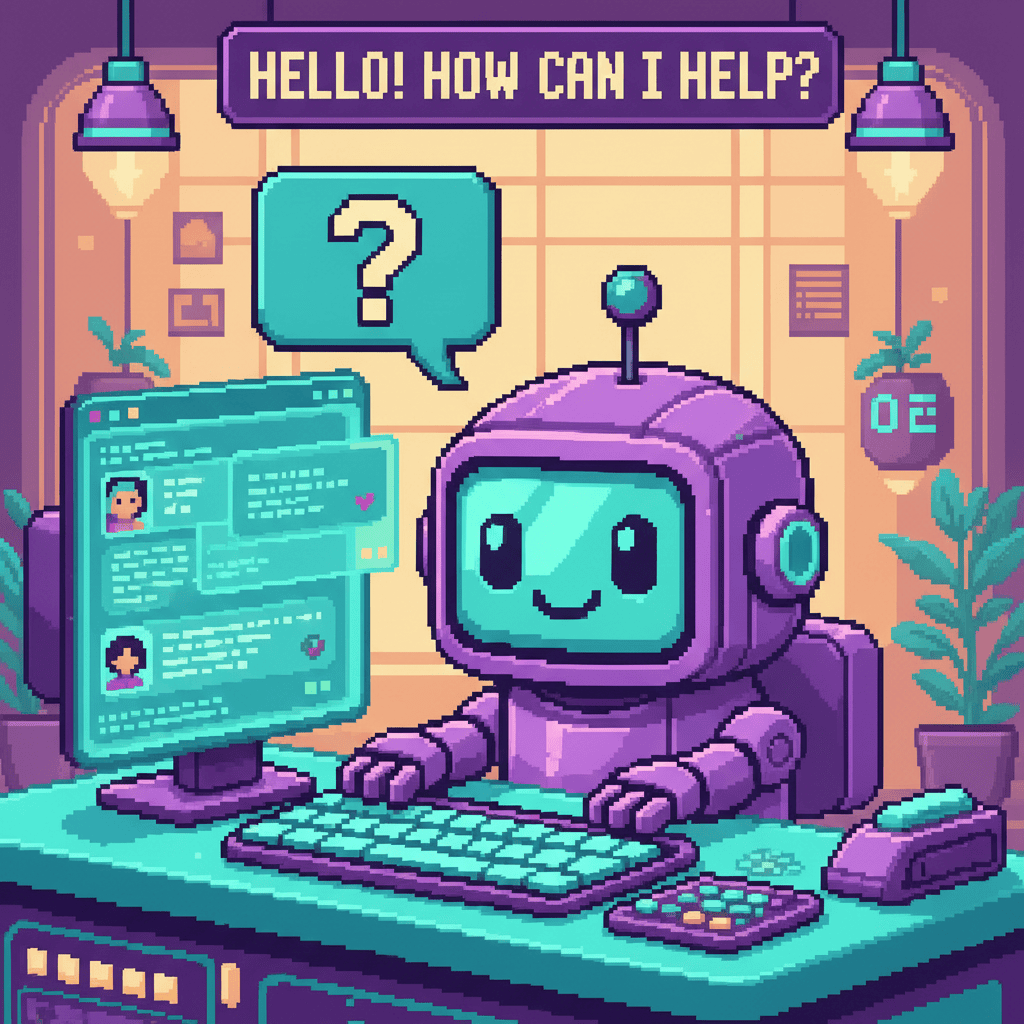
An AI chatbot is a software program designed to simulate conversation with users, typically through text or voice interfaces. Chatbots follow pre-programmed rules or use pattern matching to respond to specific inputs. They are reactive by nature: they wait for a user to ask a question and then provide an answer based on their programming.
Think of a chatbot like a well-trained receptionist at a front desk. This receptionist can answer frequently asked questions about business hours, pricing, or return policies. But the receptionist cannot make decisions on behalf of the company, negotiate a deal, or research a complex problem independently. The chatbot operates within a defined scope and cannot step outside of it.
Chatbots have become incredibly common in customer service, e-commerce, and lead generation. According to Intercom, businesses using chatbots can resolve up to 70% of routine customer queries without human intervention. That is a significant efficiency gain, and it is one reason chatbots have become a staple tool for businesses of all sizes.
How Chatbots Work
There are two main types of chatbots, and understanding the difference helps explain what chatbots can and cannot do.
Rule-based chatbots follow rigid if/then logic. They respond to specific keywords or phrases with pre-written answers. If a customer types “business hours,” the chatbot pulls up the hours. If the customer asks something outside its programmed scope, the chatbot either gives a generic response or hands off to a human. These chatbots are simple, affordable, and effective for straightforward interactions.
AI-powered chatbots use natural language processing (NLP) to understand the intent behind a user’s message. Instead of matching exact keywords, they interpret meaning. This makes them more flexible and capable of handling variations in how people phrase their questions. Platforms like Intercom, Drift, and Tidio offer AI-powered chatbot solutions that businesses can deploy quickly.
Even AI-powered chatbots, however, remain fundamentally reactive. They respond to what the user says, but they do not take independent action outside the conversation.
Types of AI Chatbots
Chatbots come in several varieties, each suited to different use cases:
- Rule-based chatbots: Follow keyword matching and pre-set scripts. Best for simple, predictable interactions.
- AI-powered chatbots: Use NLP to understand intent and respond more naturally. Handle a wider range of questions.
- Voice assistants: Voice-based chatbots like Siri, Alexa, and Google Assistant that respond to spoken commands.
- FAQ chatbots: Pre-built question and answer pairs that cover common customer inquiries.
- Hybrid chatbots: Combine AI capabilities with seamless human handoff when conversations get complex.
Each type has its place. A small retail business might use a rule-based chatbot to handle return policy questions, while a SaaS company might deploy an AI-powered chatbot to qualify leads and route them to the right sales representative.
What Is an AI Agent?
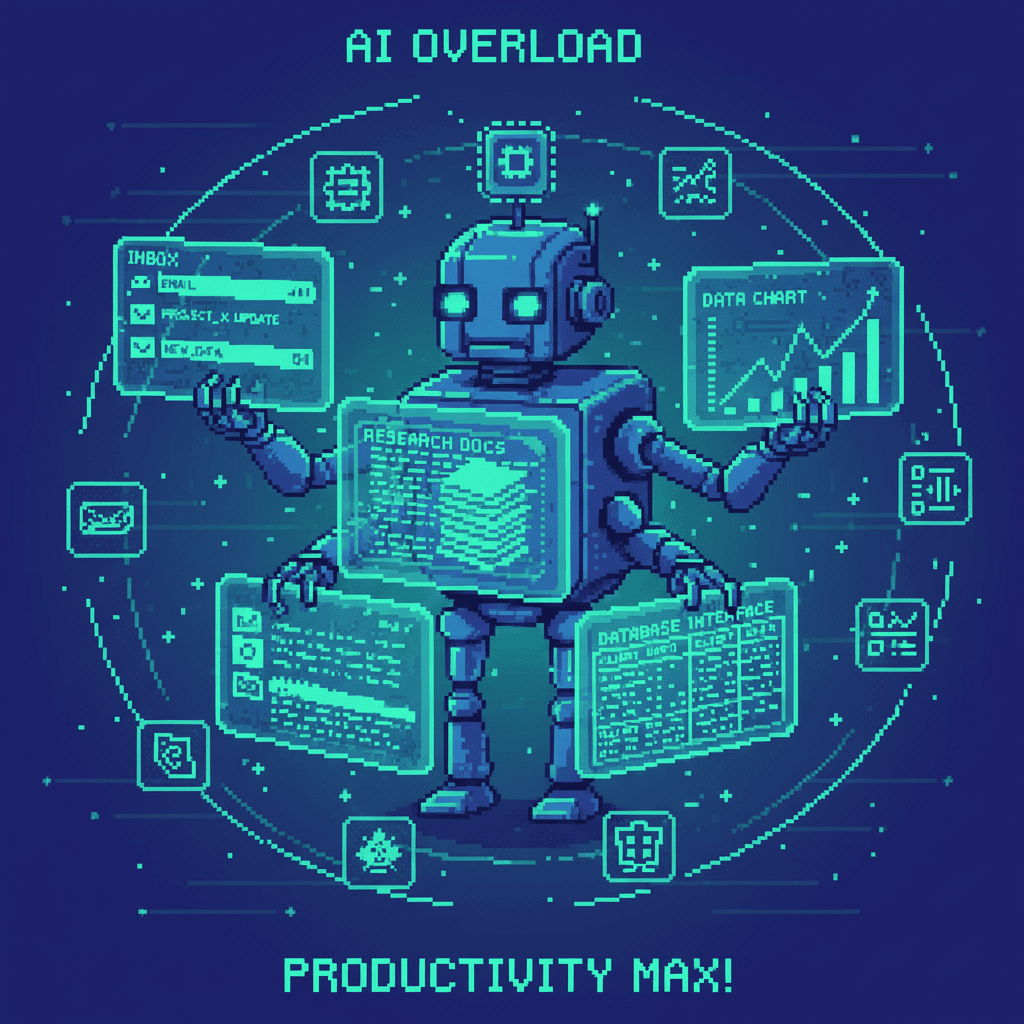
An AI agent is an autonomous system that can perceive its environment, make decisions, and take actions to achieve specific goals without constant human guidance. Unlike chatbots, agents do not just respond; they plan, execute, and adapt. They are designed to work independently, often across multiple tools and systems simultaneously.
If a chatbot is a receptionist, an AI agent is a project manager. A project manager does not wait for someone to tell them every step. They receive a goal, research the best approach, break the work into tasks, execute those tasks using available resources, and report back with results. That is how AI agents operate.
The distinction is significant. According to Anthropic, AI agents represent a shift from “systems that answer questions” to “systems that accomplish tasks.” This shift has enormous implications for businesses, because it opens up the possibility of AI handling complex, multi-step workflows that previously required significant human effort.
How AI Agents Work
AI agents operate through a cycle that researchers and developers call the “agent loop.” Here is how it works in simple terms:
- Perceive: The agent gathers information from its environment. This could be user input, web data, files, databases, or APIs (application programming interfaces).
- Think: The agent reasons about what to do next. It uses a large language model (LLM) to analyze the information and decide on a course of action.
- Act: The agent takes concrete actions. This might involve searching the web, writing code, sending emails, updating a database, or calling an external service.
- Learn and adapt: The agent evaluates the results of its actions and adjusts its approach. If something did not work, it tries a different strategy.
This loop allows agents to handle tasks that require multiple steps, external tools, and decision-making along the way. A chatbot stops at step one (perceiving the user’s input) and responds. An agent runs through the full cycle, repeatedly, until the goal is achieved.
Key Capabilities of AI Agents
What makes AI agents different from chatbots in practice? Here are the core capabilities that set them apart:
- Multi-step reasoning: Agents can break a complex task into smaller subtasks and tackle them in sequence. For example, “Research our top three competitors and write a summary” becomes a series of research, analysis, and writing steps.
- Tool usage: Agents can call external tools, including APIs, databases, web searches, and software applications. They do not exist only in a conversation window.
- Memory: Agents can retain context across multiple interactions, allowing them to build on previous work rather than starting from scratch each time.
- Planning: Agents can create multi-step plans and execute them systematically, adjusting as new information becomes available.
- Autonomous action: Agents can act without waiting for a human to prompt every step. They take initiative based on their goals.
- Adaptation: Agents can adjust their strategy based on feedback and results, making them effective even when tasks are unpredictable.
AI Agents vs. Chatbots: Key Differences
The fundamental difference between AI agents and chatbots comes down to autonomy. Chatbots respond to prompts. Agents take initiative. A chatbot waits for you to ask a question and then answers it. An AI agent receives a goal and works toward it independently, using whatever tools and information it needs. This distinction is critical for businesses evaluating AI agents for business use.
Here is a side-by-side comparison that highlights the key differences:
| Feature | AI Chatbot | AI Agent |
|---|---|---|
| Primary function | Responds to user prompts | Pursues goals autonomously |
| Decision-making | Follows pre-set rules or scripts | Makes independent decisions |
| Task complexity | Handles single, isolated tasks | Manages multi-step workflows |
| Tool usage | Limited to conversation | Uses external tools and APIs |
| Initiative | Reactive (waits for input) | Proactive (acts without prompting) |
| Context retention | Limited conversation memory | Long-term memory and learning |
| Adaptability | Fixed responses within scope | Adjusts strategy based on results |
| Best for | FAQs, simple customer support | Complex workflows, research, automation |
The most business-relevant difference is in how each tool handles complexity. If your task is straightforward and repetitive (answering the same 20 questions hundreds of times a day), a chatbot is perfectly suited. If your task requires connecting multiple systems, making judgment calls, or producing output that varies based on context, an AI agent is the better choice.
Another important distinction is cost and implementation effort. Chatbots are generally faster to deploy and less expensive. AI agents require more setup, more integration with your existing tools, and a clearer understanding of the workflows you want to automate. The tradeoff is that agents deliver far more value for complex tasks, often replacing hours of manual work that a chatbot simply cannot touch.
When Should Your Business Use a Chatbot?
Chatbots are an excellent choice when your needs are clear, your interactions are high-volume, and your tasks are well-defined. Here are the scenarios where chatbots shine:
- Handling frequently asked questions: Business hours, pricing, return policies, shipping information. These are questions you answer the same way every time.
- Lead qualification: Asking potential customers a series of qualifying questions (budget, timeline, needs) before routing them to your sales team.
- Simple customer support: Order status updates, appointment scheduling, password resets. Tasks that follow a predictable flow.
- 24/7 availability for basic queries: When your team is offline, a chatbot can still answer common questions and capture leads.
- Guiding users through simple workflows: Newsletter signups, basic troubleshooting steps, or directing visitors to the right page on your website.
Chatbots are cost-effective, easy to set up, and perfect for businesses that need to handle many simple interactions without a large support team. If you run a small business and most of your customer inquiries fall into a handful of categories, a chatbot can handle a significant portion of them automatically. You can also integrate chatbots directly into your website to provide instant support to visitors, as our guide on AI website management explains.
When Should Your Business Use an AI Agent?
AI agents are the right choice when tasks require multiple steps, external tools, or judgment. Here are the scenarios where agents deliver the most value:
- Research and data gathering: Market research, competitor analysis, content research. An agent can search the web, pull data from multiple sources, and synthesize findings into a report.
- Complex workflow automation: Multi-step processes that span multiple systems. For example, an agent that monitors your inbox, categorizes emails, drafts responses, and schedules follow-ups.
- Content creation pipelines: Research a topic, draft an outline, write a first revision, format for publication, and schedule the post. Agents can manage the entire workflow.
- Customer service that requires judgment: When support interactions require the AI to assess a situation, decide on an approach, and take action (such as processing a special refund or escalating to the right department).
- Business intelligence: Monitoring key metrics, analyzing trends, and generating reports on a regular schedule.
Agents are more complex to set up than chatbots, but they deliver exponentially more value for workflows that involve multiple steps or decision-making. If you find yourself thinking “I wish someone could just handle this entire process,” an AI agent might be exactly what you need. This is especially relevant for startups learning how startups use AI to operate with smaller teams.
AI Agents and Chatbots in Action: Real-World Examples
The best way to understand this AI chatbot comparison is to see both tools applied to the same business scenarios. Here are three AI agent use cases and chatbot use cases that illustrate how each tool handles similar challenges differently.
Example 1: Customer Support
Chatbot scenario: A retail business uses a chatbot to answer “Where is my order?” and “What is your return policy?” The chatbot handles 80% of these queries automatically, reducing the burden on the support team. Customers get instant answers, and the team focuses on the 20% of cases that need a human touch.
Agent scenario: A consulting firm uses an AI agent that reviews client files before each meeting, researches relevant case law or industry data, drafts preliminary summaries, and flags items that need attorney review. The agent does not just answer questions; it prepares work product that saves the team hours of manual preparation.
Example 2: Marketing
Chatbot scenario: A restaurant uses a chatbot to take reservations, answer menu questions, and provide directions. The chatbot handles routine inquiries, freeing up staff to focus on the dining experience.
Agent scenario: A marketing agency uses an AI agent that monitors social media trends, drafts content briefs based on what is performing well, schedules posts across multiple platforms, and generates engagement reports. The agent manages an entire content pipeline without constant human oversight.
Example 3: Operations
Chatbot scenario: An e-commerce store uses a chatbot to track shipments, process returns, and answer questions about product availability. It is efficient, available 24/7, and handles high volumes of repetitive queries.
Agent scenario: A logistics company uses an AI agent that monitors supply chain data in real time, identifies potential disruptions (weather events, supplier delays, shipping bottlenecks), and proposes alternative routes or suppliers before problems affect deliveries. The agent acts proactively rather than waiting for someone to notice an issue.
Notice a pattern? In each example, the chatbot handles repetitive, well-defined tasks efficiently. The agent handles complex, multi-step work that requires judgment and tool usage. Neither option is inferior; they serve different purposes.
The Evolution: From Chatbots to AI Agents
The journey from chatbots to AI agents did not happen overnight. Understanding this evolution helps explain why both tools exist and where the technology is headed.
Chatbots trace their roots back to the 1960s with ELIZA, a simple program that simulated conversation by pattern-matching user inputs to scripted responses. For decades, chatbots remained limited to rigid, rule-based systems. They could handle simple interactions, but they struggled with anything that fell outside their programming.
The inflection point came with the development of large language models (LLMs) like GPT-3, GPT-4, and Claude. These models gave chatbots a significant upgrade in natural language understanding, making them capable of handling far more nuanced conversations. But they also unlocked something new: the ability for AI systems to reason, plan, and act autonomously. That capability is what made AI agents possible.
Today, we are in the early days of AI agents. Companies like OpenAI, Anthropic, and Google DeepMind are all investing heavily in agentic AI capabilities. The technology is evolving rapidly, and businesses that understand the distinction between chatbots and agents now will be better positioned to take advantage of what comes next.
For business owners, the key takeaway is this: chatbots are not going away. They remain the right tool for many use cases. But AI agents represent the next step, and they are becoming more accessible and more powerful with each passing month.
Decision Framework: Choosing the Right AI for Your Business
Deciding between a chatbot and an AI agent does not have to be complicated. If you have been asking yourself “should my business use an AI agent or chatbot,” this simple decision framework will help you evaluate your needs and choose the right tool for your situation.
| Question | If Yes | If No |
|---|---|---|
| Do you need to handle more than 100 similar queries per day? | Chatbot may suffice | Consider an agent |
| Does the task require accessing multiple external systems? | AI Agent | Chatbot may work |
| Do you need the AI to make decisions autonomously? | AI Agent | Chatbot |
| Is the task well-defined with clear rules? | Chatbot | AI Agent |
| Does the workflow involve multiple steps? | AI Agent | Chatbot |
| Is budget your primary concern right now? | Chatbot (lower cost) | Agent (higher ROI long-term) |
The general rule is straightforward: start with a chatbot if your needs are simple and well-defined. Invest in an agent when you need autonomy, complexity, or multi-step workflows. Many businesses start with a chatbot and evolve to agents as their needs grow. There is no rush to jump straight to an agent if a chatbot handles your current workload effectively.
It is also worth noting that the line between chatbots and agents is blurring. Many modern platforms are adding agentic features to their chatbot products, giving users the ability to connect external tools, automate workflows, and add decision-making logic. If you are evaluating solutions today, look for platforms that can grow with you, offering chatbot simplicity now and agent capabilities when you are ready. This kind of AI augmentation approach lets you start small and scale as your confidence and needs evolve.
Frequently Asked Questions
What is the difference between an AI agent and a chatbot?
An AI chatbot responds to user prompts using pre-programmed rules or natural language processing. An AI agent autonomously perceives its environment, makes decisions, and takes actions to achieve goals without constant human guidance. The key difference is autonomy: chatbots react, agents act.
Can AI agents replace chatbots?
AI agents can handle everything a chatbot does plus much more, but they are more complex and expensive to implement. For simple, high-volume tasks like FAQ responses, a chatbot is often the more practical and cost-effective choice. The right tool depends on the complexity of your workflows.
Are AI agents better than chatbots?
Neither is universally better. AI agents excel at complex, multi-step tasks requiring judgment and tool usage. Chatbots are better for straightforward, repetitive interactions. The right choice depends on your specific business needs and budget.
How do AI agents work differently from chatbots?
Chatbots follow pre-set rules or respond to patterns in user input. AI agents use large language models to reason, plan, and execute multi-step workflows. Agents can use external tools (APIs, databases, web searches) and adapt their approach based on results.
What businesses use AI agents?
Businesses across industries use AI agents for research, content creation, customer service with judgment calls, workflow automation, and business intelligence. Startups and agencies are early adopters, using agents to operate with smaller teams and higher output.
How much do AI agents cost?
Costs vary widely. Simple chatbots can cost $0 to $50 per month. AI agents range from $50 to $500 per month for cloud-based tools, with custom solutions costing more. The return on investment of an agent often justifies the higher cost when it replaces hours of manual work.
Is ChatGPT an AI agent or a chatbot?
ChatGPT started as a chatbot (conversational AI) but is evolving toward agent capabilities with features like web browsing, code execution, and file analysis. Pure chatbots respond within conversations. Agents can take actions outside the conversation, such as calling APIs or managing files.
What is an example of an AI agent?
Examples include autonomous coding assistants (like GitHub Copilot Workspace), research agents that gather and synthesize information from multiple sources, and workflow automation agents that manage multi-step business processes across different software tools.
Ready to Find the Right AI Solution for Your Business?
Understanding the difference between AI agents and chatbots is the first step toward making the right investment in AI for your business. Whether you need a simple chatbot to handle customer FAQs or a sophisticated AI agent to automate complex workflows, the key is matching the tool to the task. AI agents for small business owners are becoming increasingly accessible, making now the right time to evaluate your options.
At Pixel Studio Creations, we help businesses identify, implement, and optimize the right AI tools for their specific needs. With over 10 years of experience building WordPress websites and delivering SEO strategies for small businesses, we understand both the technology and the business context behind every AI decision. In our experience working with startups and small businesses, the companies that get AI right are the ones that start with a clear understanding of what they need, which is exactly what this guide provides.
Ready to take the next step? Whether you want to deploy a chatbot for customer support, explore AI agents for workflow automation, or optimize your WordPress site for AI, we are here to help. Contact us today for a free AI readiness consultation and discover what the right AI solution can do for your business.