What Jobs Are Actually Being Changed by AI? A Role-by-Role Analysis Across 5 Industries
If you believe every headline, AI has already replaced half the workforce. And yet, here we are, still working. The conversation around AI changing jobs is one of the most heated debates in business right now.
But here is what the data says. The World Economic Forum’s Future of Jobs Report 2025 predicts 92 million jobs displaced by 2030, but 170 million created, a net gain of 78 million positions. Goldman Sachs Research finds that technology-driven creation of new positions explains more than 85% of employment growth over the last 80 years.
The real story is not about AI taking jobs. It is about AI changing how we work. In this post, we examine how five key industries are evolving, role by role, and what that means for your business.
How is AI changing job roles? AI is transforming jobs by automating repetitive tasks within existing roles, shifting professionals from execution-focused work to strategy-focused work. Rather than eliminating positions, AI augments human capabilities, creates new specialized roles, and drives a net increase in total employment across most industries.

The Real Story Behind AI and Jobs
The fear is real, and it is understandable. When you read that AI can write code, generate marketing copy, screen resumes, and analyze financial reports, it is natural to wonder: what is left for humans? As we debunk in our piece on AI myths holding businesses back, the panic is overblown.
The answer lies in understanding what AI does well and where it falls short. AI excels at pattern recognition, data processing, and repetitive task automation. It struggles with context-dependent judgment, empathy, creative strategy, and complex human decision-making. That distinction is everything.
The WEF Future of Jobs Report 2025 finds that 63% of employers expect AI to create net job growth. The roles that emerge are different from the ones that exist today. As we explored in our piece on AI replacing repetitive tasks, this shift happens across every industry simultaneously.
This article is for small business owners, startup founders, and anyone trying to understand what AI actually means for their team. We are going beyond the headlines to show you exactly how roles are evolving in five major industries.
Why AI Changes Roles, Not Resumes
Here is the critical distinction most people miss: AI automates specific tasks within a job, not the entire job function. Think of a chef who gets a food processor. The chef did not lose their job. They just stopped chopping by hand and started creating more complex dishes.
McKinsey Global Institute (2024) found that up to 30% of work hours could be automated by 2030, but most jobs are “complemented rather than substituted.” AI replacing tasks not jobs is the pattern across every industry below.
Goldman Sachs Research reinforces this, noting that technology-driven automation has historically created more jobs than it eliminates. The same pattern holds with AI. The professionals who thrive are the ones who learn to work alongside AI, not compete against it.
When you understand AI automates the repetitive parts of your day, the fear transforms into opportunity. Here is how this plays out across five industries.
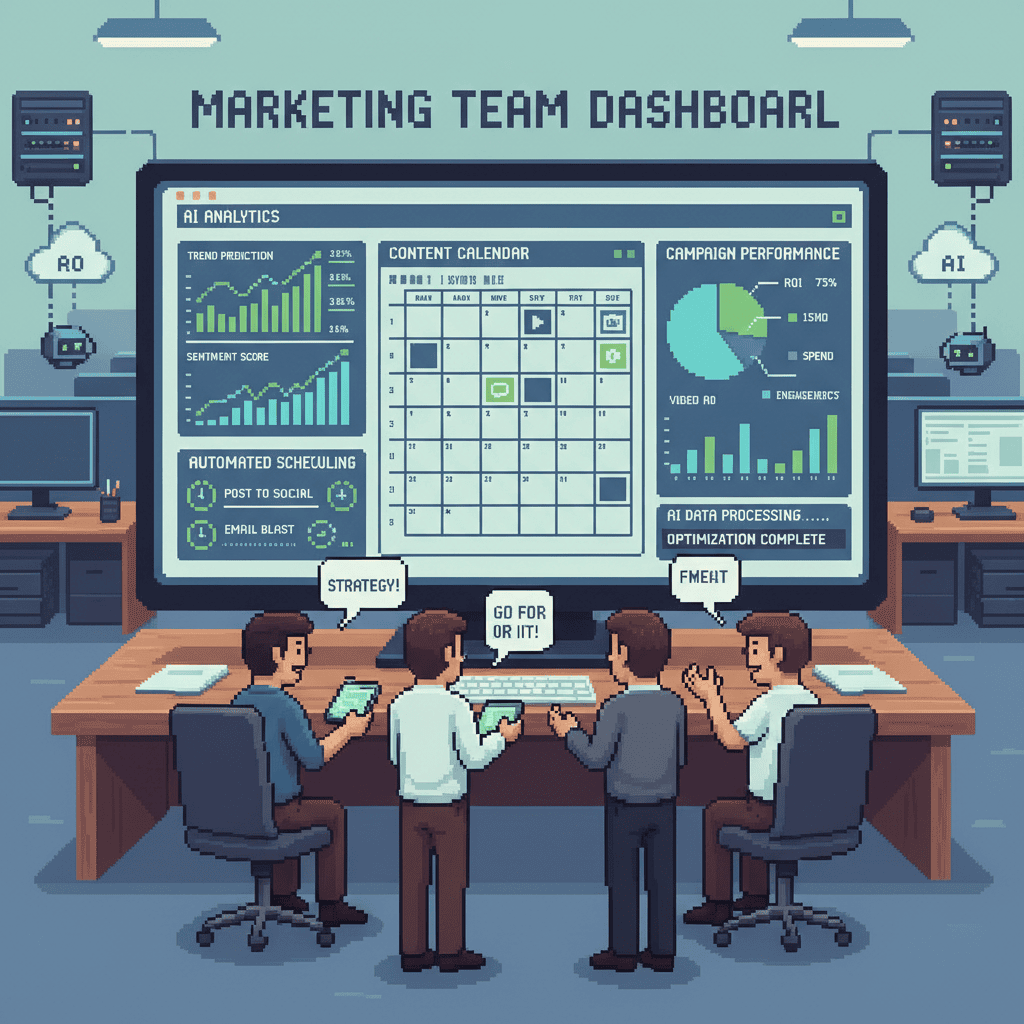
Marketing: From Content Creator to AI Strategist
Before AI: Marketers spent 60% or more of their time on repetitive tasks: scheduling social media posts, pulling basic analytics reports, drafting routine blog content, and managing email campaigns manually.
After AI: The HubSpot State of Marketing Report (2024) found that AI-powered content creation tools make marketers 40 to 60% faster at producing content. Gartner reports that AI-driven analytics reporting is 50 to 70% faster. Campaign optimization now happens in real time.
What has changed: Marketers now spend more time on strategy, brand voice, and creative direction. The role has shifted from “content creator” to “content strategist” who uses AI for scale while adding human judgment for brand voice and emotional connection. Salesforce’s State of Marketing 2024 confirms: 67% of marketers say AI allows them to focus more on strategic work.
New roles emerging: Prompt Engineer ($120K to $180K average salary), AI Marketing Strategist, Content Operations Manager, and Personalization Specialist.
Satya Nadella, Microsoft CEO, put it well: “AI will not replace marketers, but marketers who use AI will replace those who do not.” The AI impact on marketing jobs is not about elimination. It is about elevation.
HR: From Resume Screener to People Strategist
Before AI: HR professionals spent roughly 70% of their time on administrative tasks: screening resumes, scheduling interviews, managing paperwork, and processing onboarding documentation.
After AI: SHRM (2024) reports that AI screens 1,000 resumes in the time a human reviews 50. LinkedIn’s Global Talent Trends (2024) found that time-to-hire drops by 75% with AI-assisted recruitment. Onboarding training time falls by 40 to 50% per Deloitte Human Capital Trends (2024).
What has changed: HR professionals now focus on culture building, employee experience design, and strategic talent management. The role shifts from “administrative coordinator” to “strategic workforce architect” who uses AI insights to drive business decisions. As we covered in our piece on how AI saves employees hours every week, these gains compound across an entire team.
New roles emerging: People Analytics Manager, AI Talent Acquisition Specialist, Employee Experience Designer, and AI Ethics Officer (HR).
Josh Bersin, HR industry analyst, captures it perfectly: “AI is the biggest transformation in HR since the internet. It is not replacing HR professionals, it is elevating them to strategic advisors.” The AI impact on HR jobs is about freeing people from paperwork so they can focus on people.

Finance: From Data Entry to Decision Architect
Before AI: Accountants and financial analysts spent most of their time on data entry, reconciliations, and generating routine reports. These tasks consumed hours that could have been spent on strategic advisory work.
After AI: Deloitte’s State of Generative AI (2024) found that AI automates 40 to 50% of routine accounting tasks. EY reports that financial reporting time drops by 60 to 80%. McKinsey’s Financial Services practice found that fraud detection false positives are cut by 50 to 70% with AI-powered systems.
What has changed: Finance professionals now focus on strategic advisory, complex analysis, risk management, and business partnership. The role evolves from “number cruncher” to “decision architect” who uses AI for analysis while applying human judgment for ethics, strategy, and business context.
New roles emerging: AI Financial Analyst, Algorithmic Risk Manager, Financial Data Scientist, Automated Audit Specialist, and AI Compliance Officer.
David Solomon, Goldman Sachs CEO: “AI will transform every aspect of financial services. The firms that embrace this will thrive, those that resist will be left behind.” The AI impact on finance jobs is about shifting from manual processing to intelligent decision-making. Deloitte reports 94% of CFOs believe AI will be critical to their function within three years.
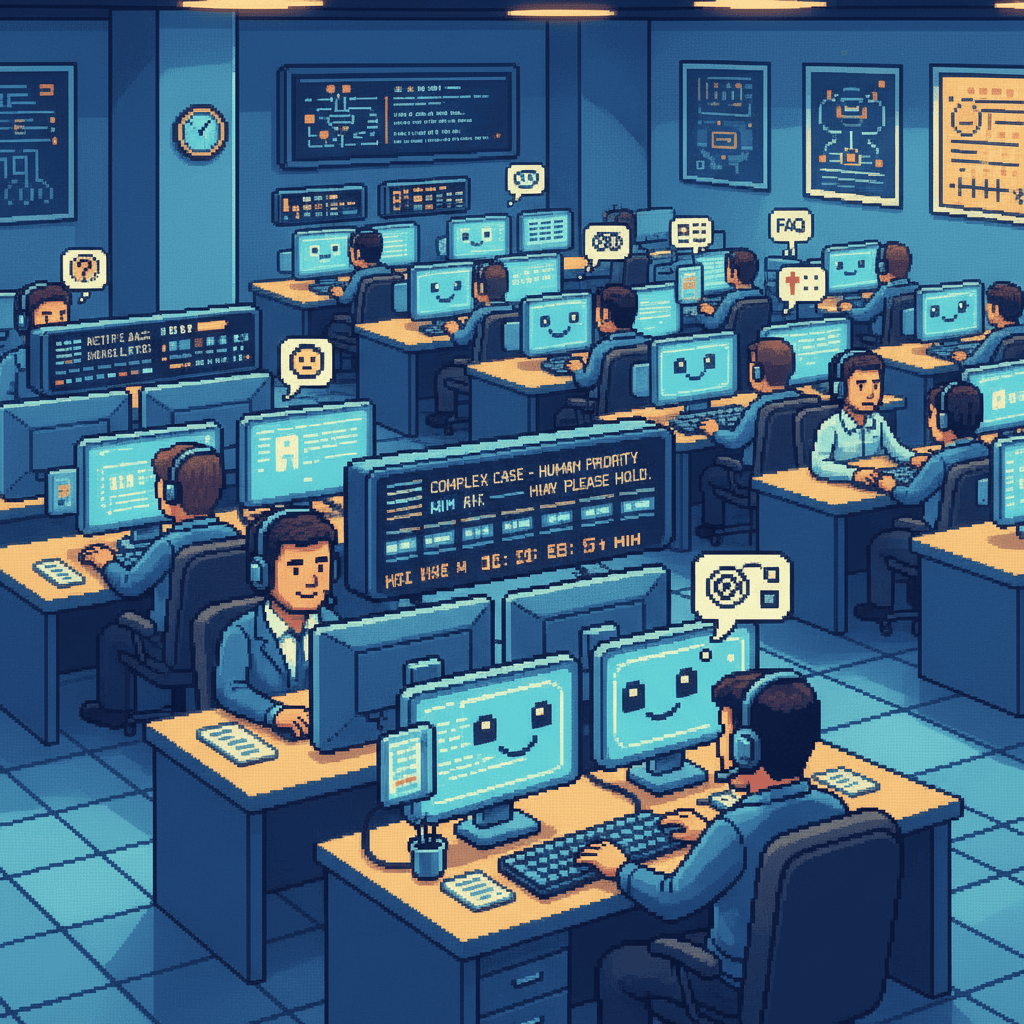
Customer Support: From Ticket Handler to Experience Designer
Before AI: Support agents spent most of their time answering the same routine questions: password resets, order status checks, and hours of operation. These repetitive inquiries consumed the majority of agent bandwidth.
After AI: Gartner’s Customer Service Research (2024) found that AI chatbots handle 60 to 80% of routine inquiries. Zendesk’s CX Trends Report (2024) shows response time dropping from 8 hours to under 1 minute. IBM reports that support costs drop by 30 to 50%. McKinsey found that CSAT scores improve 20 to 30% when AI handles routine cases.
What has changed: Agents now handle complex escalations, empathy-driven conversations, and relationship building. The role shifts from ticket volume to experience quality, balancing AI efficiency with human connection. Customer support evolves from “ticket closer” to “experience designer” who uses AI for routine cases and provides empathy for complex ones.
New roles emerging: AI Support Specialist, Customer Experience Architect, Conversational Designer, and Sentiment Analysis Specialist.
Mikkel Bjornsum, Zendesk CEO, has said: “AI is not replacing customer service agents. It is giving them superpowers.” The AI impact on customer support jobs is about making every interaction more meaningful by removing the noise of repetitive tasks.
Software Development: From Code Writer to AI Collaborator
Before AI: Developers wrote code line by line, manually debugged issues, and spent significant time on boilerplate code and repetitive testing cycles. A single feature could take days of implementation work.
After AI: The GitHub Octoverse Report (2024) found that AI coding assistants boost developer productivity by 30 to 55%. Stack Overflow’s Developer Survey (2024) shows bug detection time cut by 40 to 60%. Code review time drops by 50 to 70% per Google AI Research.
What has changed: Developers now focus on architecture, system design, and code review. The role shifts from implementation to orchestration. According to the WEF, 70% of developers use AI tools daily, and Gartner predicts 75% of enterprise developers will use AI coding assistants by 2028.
New roles emerging: AI/ML Engineer (the fastest-growing tech role), Prompt Engineer, AI Test Engineer, AI Ethics Engineer, and AI Product Manager.
Andrej Karpathy, former Tesla AI Director, summed it up: “The hottest new programming language is English. Developers are becoming orchestrators of AI systems rather than line-by-line coders.” The AI impact on software development is not about replacing developers. It is about making them exponentially more productive.
The Pattern: What All 5 Verticals Have in Common
When you step back and look at all five industries together, a clear pattern emerges. Every role follows the same trajectory: repetitive task automation frees humans for higher-value strategic, creative, and interpersonal work.
| Industry | Role Before AI | Role After AI | Time Saved | New Roles Created |
|---|---|---|---|---|
| Marketing | Content Creator | AI Strategist | 40-60% content time | Prompt Engineer, AI Marketing Strategist |
| HR | Admin Screener | People Strategist | 75% hiring time | People Analytics Manager, AI Ethics Officer |
| Finance | Number Cruncher | Decision Architect | 60-80% reporting time | AI Financial Analyst, Algorithmic Risk Manager |
| Customer Support | Ticket Handler | Experience Designer | 85% faster response | CX Architect, Conversational Designer |
| Software Dev | Code Writer | AI Collaborator | 30-55% productivity | AI/ML Engineer, AI Product Manager |
McKinsey’s AI Augmentation Framework estimates that 60% of the workforce will be augmented, not replaced, by AI. Andrew Ng, founder of Google Brain and Coursera, has said: “AI is the new electricity. It will transform every industry, but create more opportunities than it eliminates.”
The table above is your cheat sheet. Whether you run a marketing agency, accounting firm, support team, or software shop, the same principle applies: AI job transformation is about evolution, not extinction.
What This Means for Small Business Owners
If you are a small business owner thinking “AI is only for enterprise teams,” think again. The Stanford AI Index Report 2025 found that 65% of organizations use AI in at least one business function. This is not a future trend. It is current reality.
Here is your practical action plan for navigating small business AI job changes:
1. Re-skill your team. The WEF reports that 44% of workers’ core skills will be disrupted within five years. Start training now. Online courses, workshops, and hands-on AI tool trials are all accessible at low cost. Platforms like Coursera, LinkedIn Learning, and HubSpot Academy offer free or affordable AI courses.
2. Identify automation opportunities. Look at which tasks in your business are repetitive and rule-based. Data entry, scheduling, basic customer queries, and report generation are prime candidates. Automate those first.
3. Redesign job roles. Do not just add AI tools to existing job descriptions. Redesign roles around human-AI collaboration. A marketing coordinator who learns to use AI content tools becomes exponentially more valuable than one who resists.
4. Hire for new skills. Look for candidates who demonstrate AI literacy, adaptability, and strategic thinking, not just task execution. These qualities predict success in an AI-augmented workplace better than technical credentials alone.
5. Stay lean but strategic. AI helps small teams punch above their weight. Use the freed-up capacity for growth activities: marketing, product development, and customer relationships. The efficiency gains from AI let a five-person team operate like a ten-person one.
Ready to start? Identify one repetitive task in your business today and explore an AI tool that could handle it. That single step will teach you more about AI’s potential than any article, including this one.
Frequently Asked Questions
What jobs are most affected by AI?
Jobs involving repetitive data processing, routine content creation, basic analysis, and standardized customer service are most affected. However, “affected” means transformed, not eliminated. Most of these roles are evolving to include more strategic, creative, and interpersonal responsibilities.
Will AI replace my job?
For most roles, no. AI will change how you work, not whether you work. The WEF projects a net creation of 78 million jobs by 2030. The key is developing skills that complement AI: strategic thinking, creativity, emotional intelligence, and AI tool management.
How is AI changing the workplace?
AI is automating repetitive tasks across every industry, freeing employees to focus on higher-value work. This shifts job descriptions from execution-focused to strategy-focused, creates new roles like Prompt Engineer and AI Ethics Officer, and requires continuous upskilling.
What jobs can AI not replace?
Jobs requiring deep human empathy, creative strategy, complex problem-solving, leadership, and ethical judgment remain difficult for AI to replicate. AI augments these roles but does not replace the human element.
How is AI affecting marketing jobs?
AI automates content creation (40 to 60% faster), analytics reporting (50 to 70% faster), and campaign optimization. Marketers now focus more on brand strategy, creative direction, and AI tool management. New roles like AI Marketing Strategist and Prompt Engineer are emerging rapidly.
How is AI changing software development?
AI coding assistants boost developer productivity by up to 55% and handle routine coding tasks. Developers now focus more on system architecture, code review, and AI orchestration. The role shifts from code writer to AI collaborator and system architect.
What new jobs is AI creating?
The fastest-growing new roles include Prompt Engineer (300%+ job posting growth), AI Ethics Officer (200%+), AI Trainer (150%+), and Conversational Designer (120%+). Most combine domain expertise with AI literacy.
How can small businesses prepare for AI job changes?
Start by identifying repetitive, rule-based tasks that can be automated. Invest in training your team on AI tools relevant to your industry. Redesign job roles around human-AI collaboration. Hire for AI literacy and adaptability.
Is AI going to take over HR?
No. AI is transforming HR by automating administrative tasks like resume screening and scheduling so HR professionals can focus on culture building, employee development, and strategic planning. RedThread Research shows AI-powered HR improves employee retention by 25%.
What skills do I need for the AI-driven workplace?
According to the WEF, the top growing skills include AI and ML literacy, data analysis, critical thinking, creativity, emotional intelligence, leadership, resilience, and technology design.
Conclusion: Embrace the Evolution
The evidence across all five verticals is clear. AI is changing jobs, not ending them. Repetitive tasks get automated, human roles get elevated, and new positions emerge. The data tells a story of net job creation, role evolution, and real opportunity.
Start with one repetitive task. Find an AI tool that handles it. Watch how your team adapts. That is how AI changing jobs becomes your competitive advantage. Explore our guide on how AI helps small teams punch above their weight.
At Pixel Studio Creations, we help small businesses navigate the AI-powered workplace. Whether you need a website that works with AI search or content that resonates with AI-augmented audiences, we are here to help. Contact us for a free consultation.
Sources: World Economic Forum Future of Jobs Report 2025, Goldman Sachs Research 2023, McKinsey Global Institute 2024, Stanford AI Index Report 2025, Gartner Research 2024, Deloitte State of Generative AI 2024, GitHub Octoverse 2024, LinkedIn Global Talent Trends 2024, HubSpot State of Marketing 2024, Zendesk CX Trends 2024.